
PHOTO
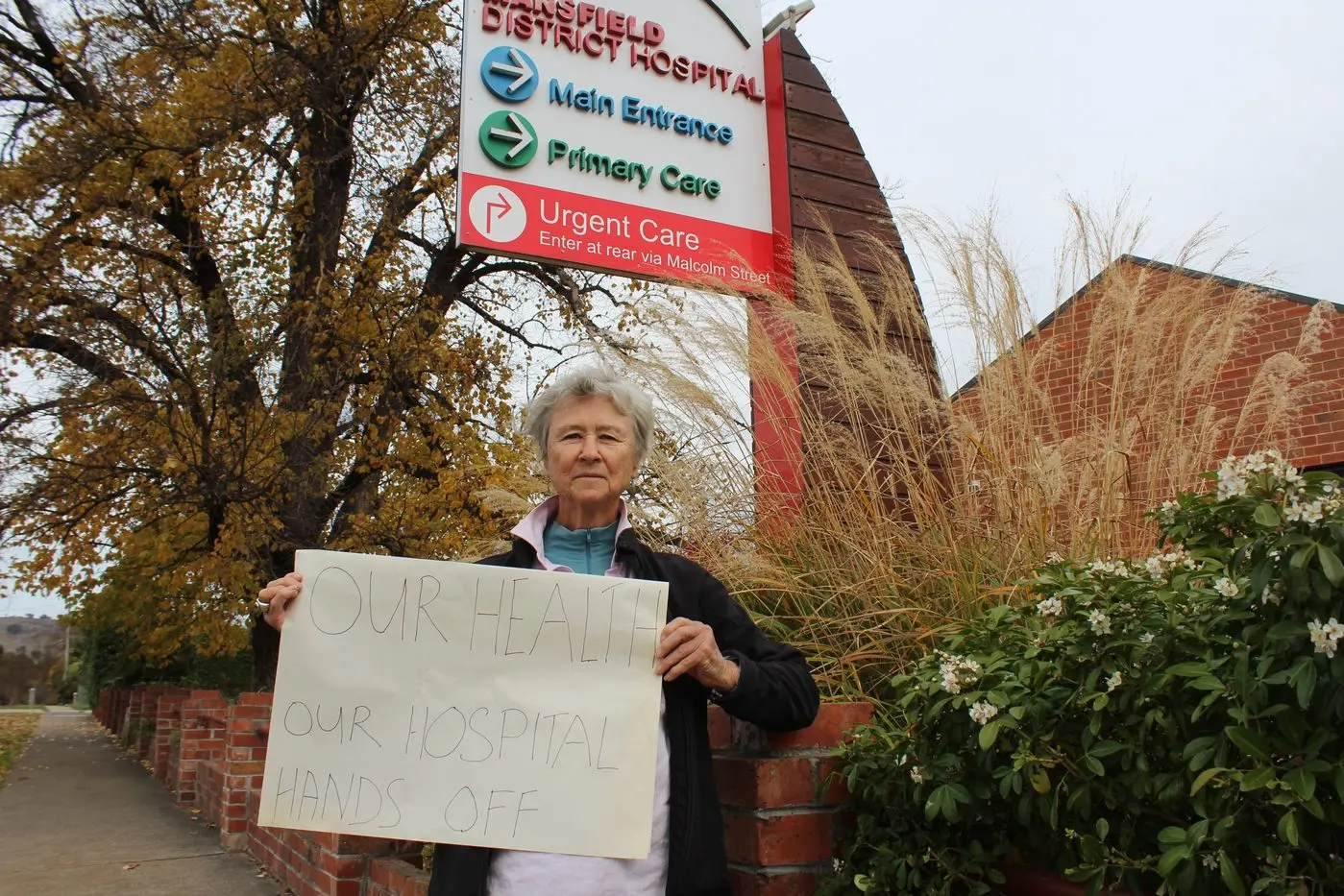
WITH the nine-member hospital board and hospital CEO Cameron Butler effectively gagged, past board members have joined the conversation explaining the importance of keeping the board autonomous and the hospital independent.
Until recently Associate Professor Louis Irving was a board member.
Indicative of the calibre of board members – both past and present - Prof Irving is the Director of Respiratory Medicine and Sleep Medicine, along with being the Director of Clinical Training at the Royal Melbourne Hospital.
He is a respiratory physician at the Peter MacCallum Cancer Centre, and the Clinical Director of the Lung Health Research Centre at the University of Melbourne’s School of Biomedical Sciences.
And he is also the Director of Medical Services at the Mansfield District Hospital.
“I took on the role under the suggestion of the board,” Professor Irving said.
Being a small hospital and the role a part-time one, the hospital was having trouble retaining somebody in the position.
So the board found a solution.
Prof Irving speaks from a strong understanding of the public health system.
“In my view the healthcare given at the Mansfield District Hospital is above and beyond, and this can be directly attributed to the skill of the nurses, doctors and the allied health professionals who all work there,” he said.
“And what makes it truly shine is the local leadership – the leadership from the board and from the CEO – and behind that the support of the local community.
“In the 50 years that I have been in medicine, medicine has become quite complex and the only way you achieve the very best outcomes is through teamwork.
“And unless there is good leadership it doesn’t work.
“I am concerned the new structure proposed by the Department of Health will weaken leadership and we will lose some very talented people, resulting in a reduction in quality of care, potentially impacting the safety and health outcomes of patients.
“There may be some valid reasons for change, however I do hope the government will reach a compromise allowing the Mansfield District Hospital to retain local leadership, the board and the CEO.”
And despite hoping the government has completed all due diligence in regards to policy development, Prof Irving said the fact that there has been no local consultation highlights the weakness of the plan.
“I think if representatives from the government came to Mansfield and saw the remarkable things the hospital is achieving they’d be very concerned about disrupting it or losing it.
“When it comes to regional facilities, Mansfield is the jewel in the health service’s crown.”
Howqua-local Sarah Stegley AM, believes that when bureaucrats look at a map they see Mansfield at the end of the road.
“But the truth of the matter is it’s not," she said.
“It’s in the middle of numerous satellite towns, some of which are quite isolated - places like Woods Point, Jamieson, Macs Cove, Bonnie Doon, Tolmie and Merrijig.
“And within that it is particularly important to acknowledge Mt Buller and Mt Stirling, and the overflow from the clinic up on the mountain that the Mansfield District Hospital treats - all those snow sports injuries."
A board member herself in the nineties, Ms Stegley AM served three years, taking on the role of chair during her tenure, the first woman to occupy the role.
Like board members before and after her, she boasts quite the impressive resume, her significant environmental credentials, philanthropic endeavours and services to the local arts community recognised with an Order of Australia in 2023.
Ms Stegley sees the role of the hospital's governance system as one of mediation and advocacy, interpreting the implications of health department policy, and how to make it work at a local level.
“A hospital board needs to be able to reflect the community’s hopes and needs and send them back, all the way up to the state health department," she said.
"I am acutely aware that just because an institution has been around for 150 years doesn’t mean it should stay in place for ever.
“But certainly at the Mansfield District Hospital our governance system has developed over time."
“And its strength lies in its ability to respond fast to local aspirations and ever-changing demands.
"It’s been an appropriate governance model for what is quite a large district."
Ms Stegley AM believes the hospital is the heart and soul of the shire.
“We get born there - we have babies there," she said.
“We have broken pelvises there.
“We present with chainsaw injuries there.
“Everybody ends up at that hospital and it is just so important that it remains relevant and community-oriented.”
Tony Tehan was born at the Mansfield hospital.
A farmer all his life, Mr Tehan was also heavily involved with the Mansfield Courier, a founding member of not-for-profit Beolite Retirement Village, and in more recent years was recognised by the shire for his commitment to community, as Senior Citizen of the Year.
As chairman of the Bindaree Retirement Centre and one of its founding members, when the hospital merged with the aged-care provider it was considered important a representative from the facility came on the board to reflect that interest.
Tony would commit the next ten years of his life to the role and is now a life member of the hospital.
He understand how it all works.
Of numerous concerns, Tony mentioned the impact on volunteerism and donations.
“I believe that if we lose our CEO, the input of the board and a lot of the services, the efforts of volunteers and fundraisers are going to be diminished,” Mr Tehan said.
“During my tenure, we had access to all the philanthropic trusts, and we raised money for both Bindaree and the hospital.
“I think it was probably around half a million dollars the board was able to raise from various trusts, financing a complete revamp of the operating theatre along with contributing to much needed work on the emergency department and at Bindaree.
“The hospital needed a new roof - which the government at the time would not subsidise - and so we had to do it ourselves, with money generated from a community that is heavily invested in the future of the hospital.
“It's one of the most important institutions in town, because without good health other things don’t matter.
“Once you’ve been through a bad health situation, you realise how invaluable that service is.
"This is not something we want to lose."