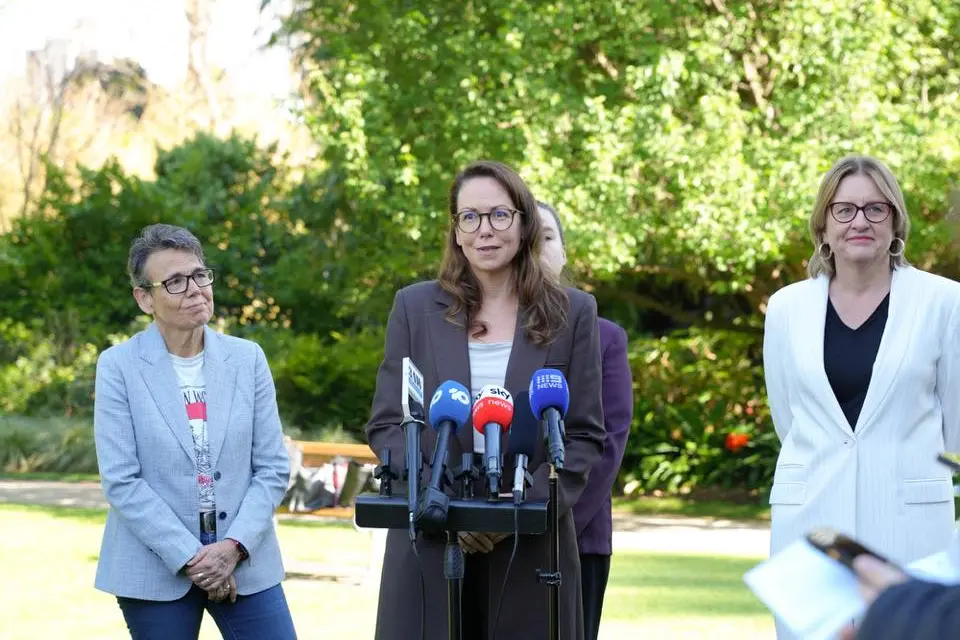
Victoria's 2026-27 state budget has landed with a mix of modest local wins, cost-of-living relief and mounting questions about whether regional communities like Mansfield Shire are getting their fair share — or just the scraps from a Melbourne-centric table. Treasurer Jaclyn Symes handed down the "Easier, Safer, More Affordable" budget last Tuesday, spruiking a $1.05 billion surplus and a raft of measures aimed at easing household pressure. Locally, the headline item is $440,000 for Mansfield Primary School — earmarked for a toilet refurbishment. It's not nothing. But it's nothing to flush about, either. What's in it for the High Country The big-ticket cost-of-living measures will filter through to Mansfield Shire households like anywhere else in the state. Motorists — and in a town where the car is king — will receive a 20 per cent rebate on vehicle registration, saving a single-car household up to $186 and a two-car family up to $372. Public transport users will get free fares through to the end of May, then half-price fares from June 1 until the end of the year. The government says regional commuters could save more than $1300 over that period. That's welcome news in theory. In practice, Mansfield's public transport options remain thin — a V/Line coach service and private charter buses to Mount Buller in winter. There are no trains. There are no trams. For most residents, getting to Benalla, Wangaratta or Melbourne means getting in the car. The half-price fare saving is real, but its reach in Mansfield is limited. Schools Beyond the Mansfield Primary toilet upgrade, the broader education spend includes $294.8 million statewide for school upgrades across 31 government schools, with a further $28.8 million for disability access improvements. Nearby, Yarrawonga P-12 College picks up $9.29 million for a new learning facility. The budget also funds 22 new kindergartens statewide and continues the government's Free Kinder commitment, saving eligible families up to $2700 per child annually. For Mansfield Primary, the funding will go toward refurbishing the school's older toilet block, originally built in the 1970s and largely untouched since. Principal Nicole Salmon said the reaction from staff and students had been overwhelmingly positive. "We are so excited to have the grant — it will complete the refurbishment of this original part of our school," Ms Salmon said. Of particular importance is the upgrade to the school's disability toilet facility, which Ms Salmon said had not been meaningfully updated in roughly two decades. "This refurbishment will accommodate the students for the next 20 to 30 years," she said. In a statement, Ms Symes said the investment reflected Labor's priorities. "Nothing is more important than our children's future," she said. Health, police and emergency services Regional health gets a $75 million infrastructure fund, though specific allocations for the High Country have not been detailed. The budget commits $62 million to recruit 200 police reservists for desk duties — freeing frontline officers — and $33.5 million for a Violence Reduction Unit. CFA brigades statewide share in $12.7 million for new stations and $100 million for new tankers and pumpers, a measure that will resonate in a fire-prone region like this one. What State MP for Eildon Cindy McLeish says Eildon MP Cindy McLeish didn't mince words, describing the budget as a missed opportunity for Mansfield Shire and pointing to the state's ballooning debt as the defining issue facing the region — whether locals know it or not. On the question of what would make the most immediate difference to people in the electorate, Ms McLeish went straight for the hip pocket. "Reducing the state's debt would be a good start," she said. "This budget reveals the debt will be just shy of $200 billion by 2030 — that's up to $47,000 for every working adult in Mansfield Shire." She argued the debt trajectory had direct consequences for local services. "The only way Labor plans to pay for that is through taxes — taxes on businesses, investors, farmers and workers; taxes on building a home, buying a home," Ms McLeish said. "The reality of that is the more money going into paying off the debt, the less money there is for our roads, schools and hospitals." She also flagged a conspicuous local omission — one that emergency services will notice. "I would have also liked to have seen money for Mansfield's emergency services precinct — new homes for the SES and ambulance station that are so desperately needed," she said. On the $440,000 for Mansfield Primary School, Ms McLeish welcomed the investment but framed it against the backdrop of a rapidly growing community with growing needs. "Mansfield Primary School has grown by nearly 50 per cent over the past decade — a clear sign more families are choosing to call the district home," she said. "It needs continued investment to keep up, so local kids have the facilities they need for the future." The government's much-touted free and half-price public transport measures drew a pointed response from the MP, who noted their limited relevance in a region where the car is the only real option. "Free transport is great if you have a public transport network, but let's face it — the only service in Mansfield is a bus to Melbourne," Ms McLeish said. "It has limited relevance in the country; it doesn't help people on farms get into town." She nominated the Emergency Services Levy as a more meaningful cost-of-living lever for High Country households. "Families are really struggling with the cost of living, so dumping the current Emergency Services Levy would help everyone," Ms McLeish said. "The Levy hits every household, directly if you own a home, indirectly if you rent. "It takes money out of your pockets on the premise it goes back into the CFA firefighting fleet; it hasn't." The debt elephant in the room For all the feel-good announcements, Victoria's financial position casts a long shadow over the celebrations. State debt is forecast to balloon from $165 billion today to nearly $200 billion by 2029-30. By that point, interest repayments alone will hit $11.82 billion a year — roughly $32 million every single day. Credit agency S&P has warned Victoria's AA rating could be at risk if the government strays from its budget commitments heading into an election year. The opposition has labelled it a budget with "no plan" on debt, while the government insists it is being disciplined. Treasurer Symes acknowledged the challenges when speaking with reporters, but pointed to the surplus as evidence of fiscal responsibility. "We join Western Australia and South Australia as the only jurisdictions in surplus," she said. Farmers left wanting For Mansfield's agricultural sector — cattle country, horse country, High Country produce — the Victorian Farmers Federation's verdict on the budget was pointed. Acting VFF President Peter Star said the agriculture industry, which contributes more than $22 billion annually to Victoria's economy, received just $84 million in support — a figure he described as woefully inadequate. "The Budget has been sold as Victoria's vision for the future, but is lacking when it comes to detail for regional Victoria," Mr Star said. The VFF also took aim at the government's $1.04 billion roads package, which sounds substantial until you consider the federation has been calling for an additional $500 million per year just to start addressing the backlog. "Victoria's regional roads are crumbling and this package is like putting a band-aid on a broken leg," Mr Star said. For High Country producers navigating drought, rising input costs and deteriorating rural roads, those words will land with a thud. The levy uncertainty stings too — farmers have been loudly opposed to changes to the Emergency Services and Volunteer Fund levy, and Mr Star said they have been "left in the dark" about its future. Tourism: the missing piece Tourism is the other engine of Mansfield's economy. The budget's regional tourism commitments are, at best, implicit. The half-price public transport fares and the roads blitz may indirectly benefit visitor numbers, but there is no specific investment in tourism infrastructure for the High Country in this budget. In an election year, that absence will not go unnoticed by operators who've weathered the post-COVID and post-bushfire recovery and are still rebuilding. The bottom line The surplus is real, the cost-of-living measures are tangible, and the school and health commitments have substance. But for a community like Mansfield — car-dependent, agriculturally significant, tourism-reliant and geographically removed from Melbourne's orbit — the budget might read more like a city document with a regional afterthought stapled to the back. A new toilet block at the primary school is appreciated. But is the budget one-ply at best? Mansfield Shire Council was contacted for comment but did not respond prior to deadline. Have a view? Email a letter to the editor with your full name and suburb to edit.mcourier@nemedia.com.au