
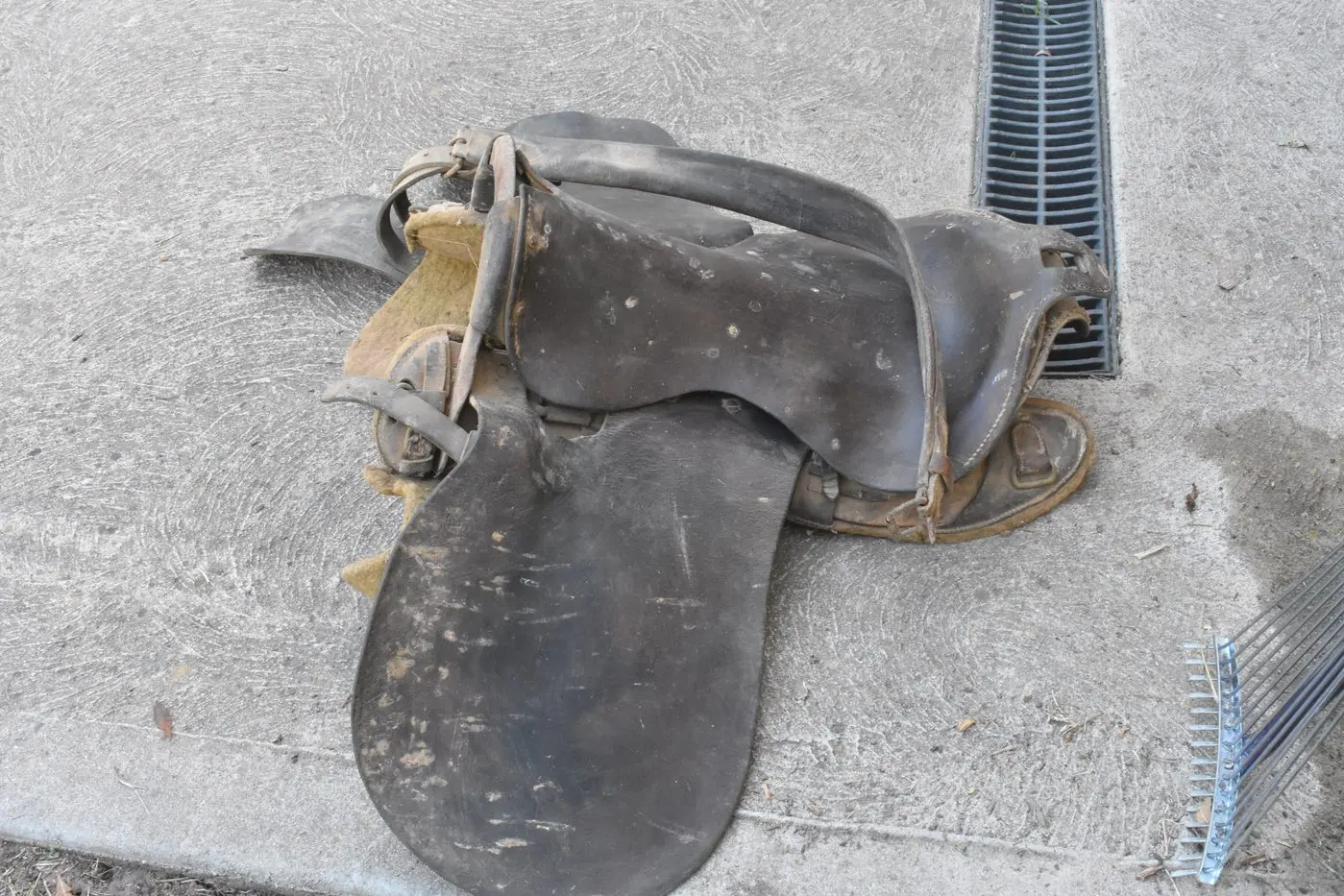
PHOTO
– "The mud here is awful and one has to camp anywhere he can. We went through mud and slime three feet deep through Turk Lane and Goose Alley.... All the while Old Fritz pelted us with whiz bangs, and all other instruments of torture which the devil has invented." THOMAS WITHERS 57th Battalion – 5th Division.
THOMAS Withers, 33 year old farmer, joined the Australian Imperial Forces (AIF) being one of the many Mansfield men going to the Great War in 1915.
He was firstly appointed to the 12/8th Rifles. Within days he was transferred to A Company 11th Depot Battalion.
Withers started his diary from November 23, the day he set sail from Melbourne on the ship Ceramic – he did not realise what lay ahead of him during his four years in war.
He was surprised from time to time catching up with friends he knew from home among the more than 15,000 Australian troops serving overseas.
During the next four years he saw some of the worst combats of the Western Front after being assigned to the 57th Battalion – formed in Egypt in January 1916 following Gallipoli.
Initially the 57th was sent to a "nursery sector" in northern France, but in July experienced its taste of the fighting when the 5th Division was committed to the Battle of Fromelles, the AIF's initiation on the Western Front. The attack at Fromelles was later described as "the worst 24 hours in Australia's entire history".
After Fromelles, the 57th spent the next 2.5 years in the trenches in France and Belgium, seeing action in many of the major battles during this time.
In 1917, the Battalion joined the brief advance that the Allies undertook when the Germans withdrew to the Hindenburg Line.
It then undertook a defensive role during the Second Battle of Bullecourt; a major attack at Polygon Wood and then transferred to the Ypres sector in Belgium.
The 57th Battalion undertook a defensive role around Corbie, before participating in a counter–attack on the morning of April 25, 1918 (Anzac Day) at Villers–Bretonneux.
In July (1918), the 60th took part in a diversionary attack during the Battle of Hamel.
In August, the 57th joined the Allied offensive that ultimately ended the war.
It fought its final action around the St Quentin Canal in September.
Thomas Withers, after arriving in Alexandria in December 1915, spent much of the next three months in Egypt with training, marches carrying full packs.
He recalled taking a walk 'downtown' (Cairo) and met with Harry Williams and Charlie Cookson, Charlie Bird, Jim Arbuthnot and 'a lot more of the old crowd'. His notes mentions meeting up with Hughie Spence, Simon Hennessy and Bill Hossack. With new reinforcements arriving into the Cairo camp he also caught up with Percy Walker, Don Ross, Alex Robb and Allan McColl – Mansfieldians.
March (1916) and he took a visit to the Light Horse camp and found Charlie Colson and Bert Andrews and a few days later went back to Heliopolis and had a good time with Dave Payne, Cecil Jessops, Jack Parsons and Jack Richardson – more familiar names from home.
On April 25, 1916 the anniversary of the Landing on Gallipoli was commemorated for the first time with sports games and afternoon tea.
He was transferred to Tel–el–Kebir, shifting to the 57th Battalion 5th Division Detail camp, taking a job as groom for the adjutant; but found it too boring.
In August of that year he was posted to Rifle Villa – going out every night on 'fatigue' on the frontline filling sandbags etc but commented there was snow.
Much of Withers' time in the field was delivering rations to the frontline using mules, donkeys and horses – these men were known as 'drivers'.
January 1917 saw his battalion placed in a small village Chausey – near Amiens. Withers described the Somme battlefield as 'deeper in mud than when they had first passed through'.
April 25, 1917 they again commemorated Anzac Day with sports, beer and vegetables – supplies gained from nearby Corbie.
Much of Withers' diary describes the smaller towns of France where they either camped or visited for supplies and recreation.
In September 1917 his division was forming a 'pack troupe' for the purpose of ration carting when they got to Ypres. "We have an ASC Sergeant and an officer instructing on how to put a pack saddle on and they are trying to teach the donks to form fours and mark time. I am expecting to see the instructors getting their brains knocked out by some of the donks; who rightly resent this nonsensical drill," he wrote.
On September 25 he records the 5th Division pack troupe being formed and were at horse lines near the Belgic Chateau – they took bombs up to Black Watch Corner.
On a very sad note he wrote: "Dumps are getting blown up every day and loose horses with bits of harness hanging to them are to be seen on the road every day. One sees wounded horses walking along the road wending their way patiently and painfully back to their lines.... dead men and horses are to be seen all along this route. This place Ypres is hell let loose..."
The 1918 New Year saw his battalion in Belgium and celebrated Christmas with a feast.
Withers got notice of the Armistice on November 11, 1918 and left the front on November 15.
His diary finished on November 26 when he noted he left Abbeville by train and went to Tavril and then on to St Aubin.
Withers returned home on May 31, 1919.
Returning home he married Olive Hindson – they went on to have three children: Charles in 1921, followed by Jean and Ruth.
Thomas Withers was born October 18, 1881 and died in Mansfield on October 13, 1964.
He came back to live at Howes Creek farm taking up the mail run for the next 40 years.
He suffered terrible health all his life after being gassed in the trenches in Belgium.
His daughter Ruth married Douglas Tait who had a son Ron – the grandson of Thomas Withers. Ron still resides in Bonnie Doon and is now the keeper of the diary, war medals and other memorabilia from Thomas' WWI experiences.