
PHOTO
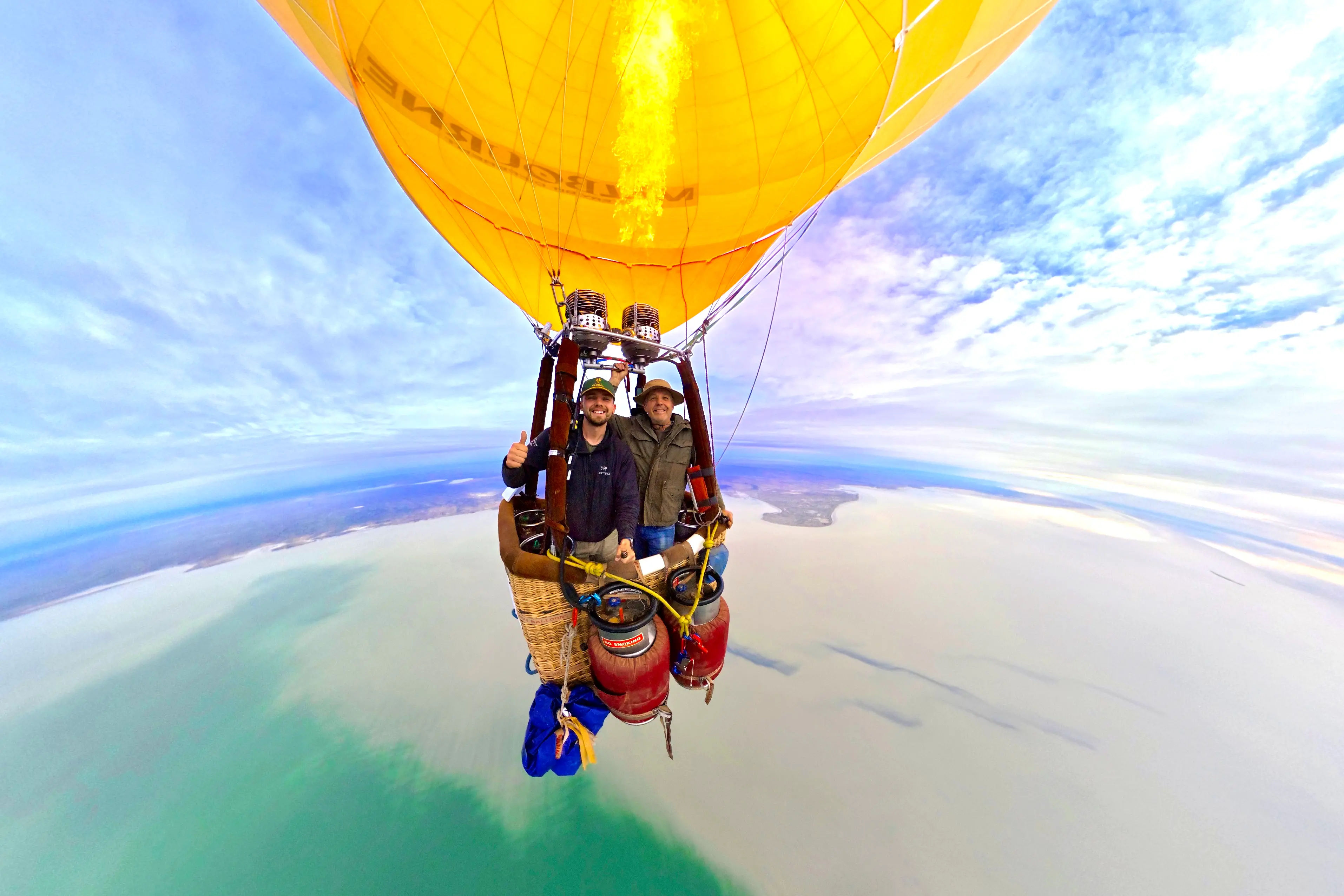
Two pilots usually flying the skies of Mansfield have helped complete a world-first 175-kilometre hot-air balloon crossing of Lake Eyre.
Global Ballooning’s father-and-son pilots, Kiff and Pat Saunders, piloted one of two balloons involved in the historic expedition.
Both regularly fly in Mansfield, and Kiff founded Global Ballooning here in 1992, also making it the company’s first flight location.
“The Lake Eyre flight required considerable preparation, sound judgement and a high level of technical skill,” Kiff said.
What began as a conversation over a beer between two mates became an ambitious undertaking requiring weeks of weather analysis, complex logistics and careful coordination.
The 12-person expedition brought together pilots and crew from Melbourne, Mildura, interstate and overseas.
Two balloons completed the crossing, with Kiff and Pat flying together and Mildura pilot Ben Gowers flying solo in the second balloon.
The balloons launched from the western edge of Kati Thanda–Lake Eyre National Park before crossing Lake Eyre North and Lake Eyre South.
The route then took them over the Marree Man geoglyph before both balloons landed safely beside the Oodnadatta Track, exactly as planned.
“This was an extraordinary flight over a landscape that very few people will ever experience from this perspective,” Pat Saunders said.
“To see Kati Thanda transformed by floodwater, stretching beneath us like an inland sea, was unforgettable."
The flight lasted three hours and 40 minutes, covered approximately 175 kilometres and reached a maximum altitude of 9501 feet – around 2900 metres.
At times, they travelled at more than 70 kilometres per hour.
For almost three weeks, the pilots closely monitored weather forecasts while waiting for conditions capable of carrying the balloons across the immense lake and providing a safe window for take-off and landing.
The winds needed to be strong enough to cover the required distance while remaining suitable throughout the nearly four-hour flight.
Wind direction was equally important, as the Oodnadatta Track provided the only practical recovery route through the remote landscape.
The Lake Eyre crossing also took place during an exceptional natural event, with floodwaters transforming large areas of the normally dry salt lake into an inland sea and producing some of the highest water levels observed in decades.
Soon after the flight, heavy desert rain flooded surrounding roads, temporarily stranding the team at Leigh Creek while they waited for southern routes to reopen.
Despite the delay, the team was grateful to have completed the crossing safely and witnessed one of Australia’s great landscapes at such a remarkable point in its natural cycle.
Mansfield local Bevan Fistr is also expected to begin flying commercially in the region soon after completing training through the company’s pilot training school, with Kiff and Pat both contributing to his development.