
PHOTO
63026.0
Every farm has one.
They arrive quietly, often without paperwork, and immediately begin behaving like they own the place.
They hold irregular working hours, refuse formal supervision, and yet somehow remain indispensable.
I am speaking, of course, about the farm cat.
In the grand mythology of rural life we tend to talk about tractors, dogs, and perhaps the odd heroic chicken.
But the farm cat is the shadow workforce of agriculture: uncontracted, self-appointed, and operating mostly under the cover of darkness.
Ours appeared the way many farm cats do, thin, suspicious, and clearly not yet persuaded that humans are entirely trustworthy.
Within a week she had moved into the machinery shed.
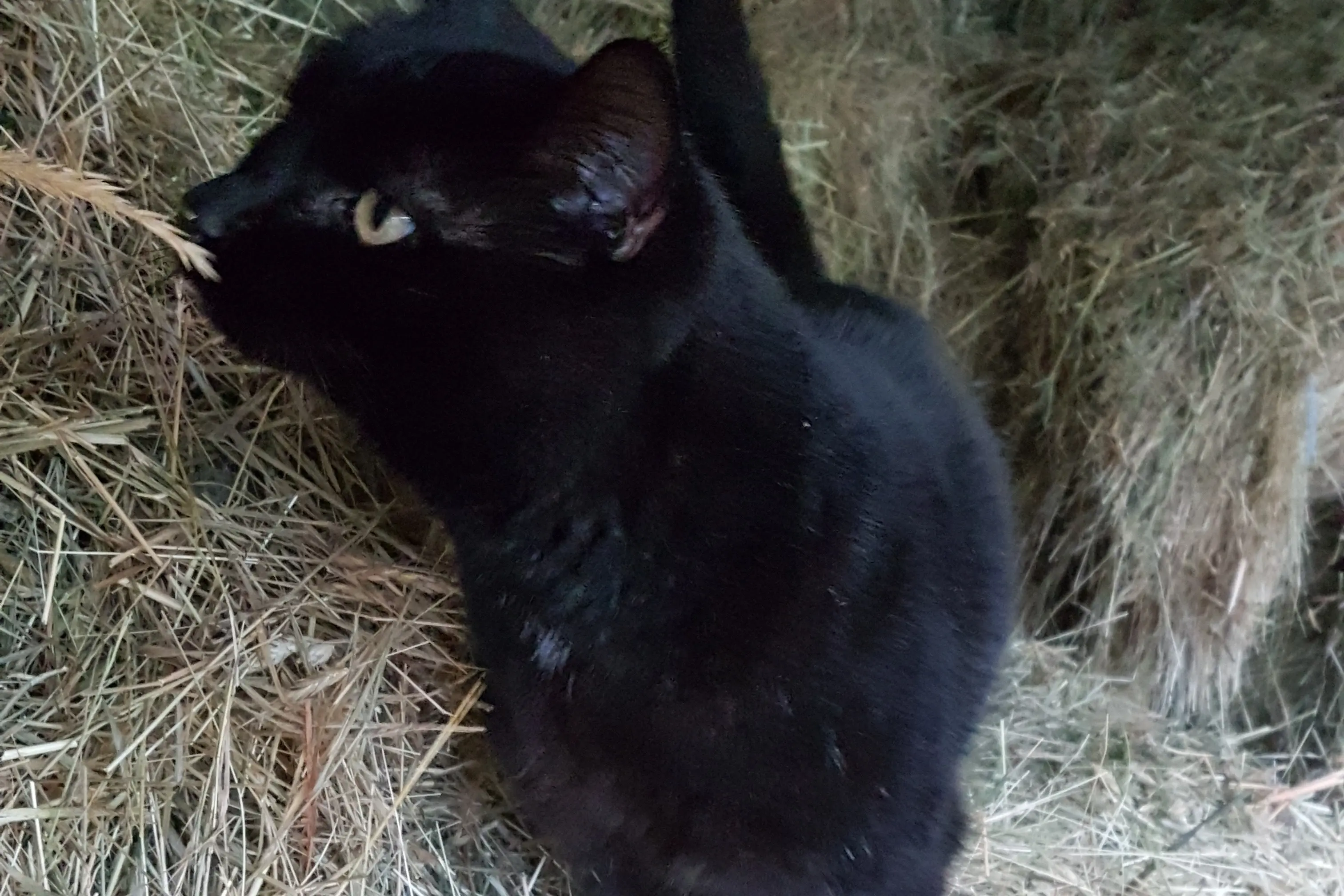
Within a month she had taken up residence on top of the hay bales where she could supervise the entire property like a very small, glossy-coated foreman.
The job description of a farm cat is surprisingly simple: patrol, observe, and occasionally deal with rodents who have mistaken the feed shed for a free buffet.
Anyone who has stored grain, chook feed, or livestock pellets knows the alternative to having a cat is essentially running a rodent bed-and-breakfast.
Mice and rats are enthusiastic tenants.
They chew bags, spoil feed, and treat expensive machinery wiring as a late-night snack.
Enter the farm cat.
What makes them fascinating is that no one actually trains them.
They arrive with the skills pre-installed.
Somewhere in the feline operating system is a program labelled “Quietly Sit Near Things That Rustle.”
Hours can pass this way.
A farm cat can stare at a grain sack with the intensity of a chess grandmaster contemplating the endgame.
The patience is extraordinary.
I once watched ours hold the same position long enough for me to make lunch, eat it, and do the washing up afterwords.
Then, movement.
The result is swift, efficient, and generally followed by the cat returning to her supervisory duties as if nothing particularly dramatic has occurred.
Of course, farm life comes with plenty of wildlife and most of us quite like it that way.
Swallows patrol the airspace, wrens inspect the garden beds, and magpies and Kookaburras hold what appear to be highly organised committee meetings on the fence posts every morning.
A sensible farm cat tends to fit into that arrangement rather than disturb it.
The trick, as with most things on a farm, is simple management and a bit of common sense.
Our cat is well fed, which greatly reduces any interest in unnecessary hunting.
Her preferred shift is the night patrol in the sheds where the mice are enthusiastic and plentiful.
Daytime generally finds her asleep on a hay bale, on the seat of the ride on mower, or occasionally curled up on top of a stack of empty feed bags.
A bell on the collar, desexing, and regular meals go a long way toward producing a cat whose main professional focus remains rodents in the feed shed.
Birds, being active during the day and possessed of excellent eyesight, generally give the sleeping supervisor a wide berth.
In practice, the balance works itself out.
The swallows keep the insects down, the magpies maintain their running commentary on rural affairs, and the farm cat quietly handles the night shift in the grain department.
In truth, farm cats are less like wild predators and more like eccentric co-workers.
Everyone appears to understand their role, even if none of them ever signed a contract
They attend every activity whether invited or not.
Fixing a fence? The cat is supervising.
Loading hay? The cat has opinions.
Sitting down after a long day? The cat has suddenly decided your lap is the ideal location for a meeting.
They also possess the remarkable ability to appear precisely when food is opened, even if they were previously thought to be somewhere near the back paddock.
How they know remains one of agriculture’s great mysteries, somewhere between predicting rain and locating missing fencing pliers.
Of course, farm cats are not purely practical creatures.
Their true value is harder to measure.
On cold mornings they sit in the sun beside the shed wall soaking in the sun like solar panels.
On other days they wind around your boots and remind you to pause for a minute.
And on quiet evenings they patrol the yard while the magpies argue in the trees and the mountains settle into dusk.
For an animal that never officially applied for the job, the farm cat manages to perform it rather well.
Rodent control officer, shed supervisor, and part-time philosopher.
Not bad for someone who technically lives in a hay bale.